Saves, Playlist Adds, and Reposts: Why They Matter More Than Streams
3 Sep 2026
Stream counts are a visible but incomplete measure of a release’s success. A stream only tells you that someone pressed play. A save, a playlist add, or a repost says much more: the listener decided to come back to the music, weave it into their life, or recommend it to others.
For an artist, that difference is crucial. A big spike in streams can come from ads, algorithmic recommendations, or a timely news hook. But the actions after the stream show whether attention turned into real interest—and whether a casual listener became a potential fan.
Why Streams Don’t Tell the Whole Story
A stream is just the top of the funnel. It can be short, passive, or even accidental. Rising stream numbers don’t always mean your core audience is growing.
For example, a track might get 100,000 streams from an ad campaign. That’s great for reach. But if only a few dozen people save it, almost no one adds it to personal playlists, and hardly anyone shares it, the campaign created contact—but not lasting impact.
The reverse situation is often more valuable long term: a release with modest streams but a high rate of saves and playlist adds. That means the music found its audience—maybe small, but engaged and likely to return on their own.
It’s important to look not just at raw numbers, but at ratios (saves per stream, adds per stream), how metrics evolve after release, and where the audience is coming from.
Saves: A Signal of Personal Value
A save is one of the strongest listener actions. The user is essentially saying: “I want to be able to get back to this music quickly.”
For streaming algorithms, this is a key behavioral signal. A saved track is much more likely to be played again, which means it has not just momentary appeal but long-term value for that person.
Saves help you understand:
- How well the track works after the first listen.
- Whether the music matches the expectations set by your content or ads.
- Whether the release has potential for repeat listens.
- Whether you’re building a base of listeners around the artist, not just one-off reach.
If people stream the track but don’t save it, check whether your creatives and release description are on point, whether you’re targeting the right audience, and whether the track’s intro matches the promise made in your teaser. Sometimes the issue isn’t the track’s quality, but a gap between the communication promise and the actual listening experience.
Playlist Adds: When Music Becomes Part of Life
Adding a track to a playlist is more contextual. The listener doesn’t just want to return to the song—they’re placing it into a specific scenario: commute, workout, work, evening, party, personal mood, or a curated selection for friends.
Unlike editorial playlists, user playlist adds are especially valuable because they happen organically. They show the track has found a practical place in everyday music consumption.
Such actions can give a release a longer lifecycle. An ad campaign ends, a news moment fades, but the track stays in playlists and keeps getting regular plays. This builds a stable stream base and increases the chance of new algorithmic recommendations.
Pay attention not only to the number of adds, but also to the type of playlists. If your audience regularly includes the track in themed collections, that gives you material for future communication. For example, a song often added to evening or romantic playlists can be promoted through matching emotional scenarios in short videos, posts, and visuals.
Reposts: The Strongest Form of Trust
A repost or sending a track to a friend is more than a reaction to music—it’s an act of recommendation. The person is using their own reputation and personal channel to share the artist with someone else.
That’s why reposts are especially important for organic growth. Ads can buy reach; listener recommendations create trust that paid promotion can’t fully replicate.
Reposts usually happen when a track has at least one of these factors:
- A strong emotional reaction: the listener recognizes their own state or experience in the song.
- A clear social context: the track feels right to send to a specific person, drop in a group chat, or use in a video.
- A distinct identity: the artist, lyrics, sound, or visuals help the listener say something about themselves.
Don’t just ask your audience to “repost.” It’s more effective to give them a clear reason: a question on social media, a short clip with a powerful line, a behind-the-scenes story, or a prompt to tag someone who matches the track’s mood.
Which Metrics to Watch Together
There’s no single universal number that defines a release’s success. It’s better to treat streams and engaged actions as a connected system.
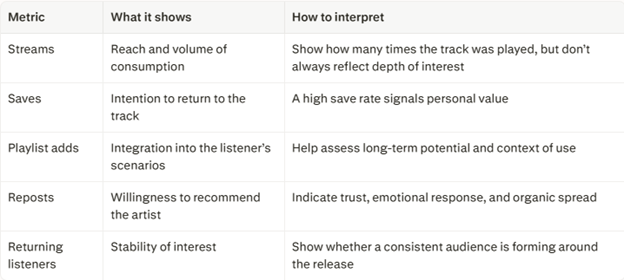
It’s especially useful to compare these metrics by traffic source. Audiences from short videos, ads, social posts, editorial playlists, and platform recommendations can behave very differently. A lot of streams from one source doesn’t always mean that source brings the most valuable listeners.
How to Use These Data in Promotion
Data only becomes useful when it influences your next decisions. If you see high interest in a release but low conversion to saves, don’t immediately increase your ad budget. First, figure out where attention is dropping off.
Use analytics to:
- Compare audience reactions across different releases and promo formats.
- Identify cities, platforms, and traffic sources with the most engaged listeners.
- Decide which tracks are worth pushing again.
- Choose snippets for vertical videos based on real audience response.
- Evaluate campaigns not just by cost per stream, but by the quality of the listener acquired.
- Plan future releases based on which sound, mood, or approach holds attention best.
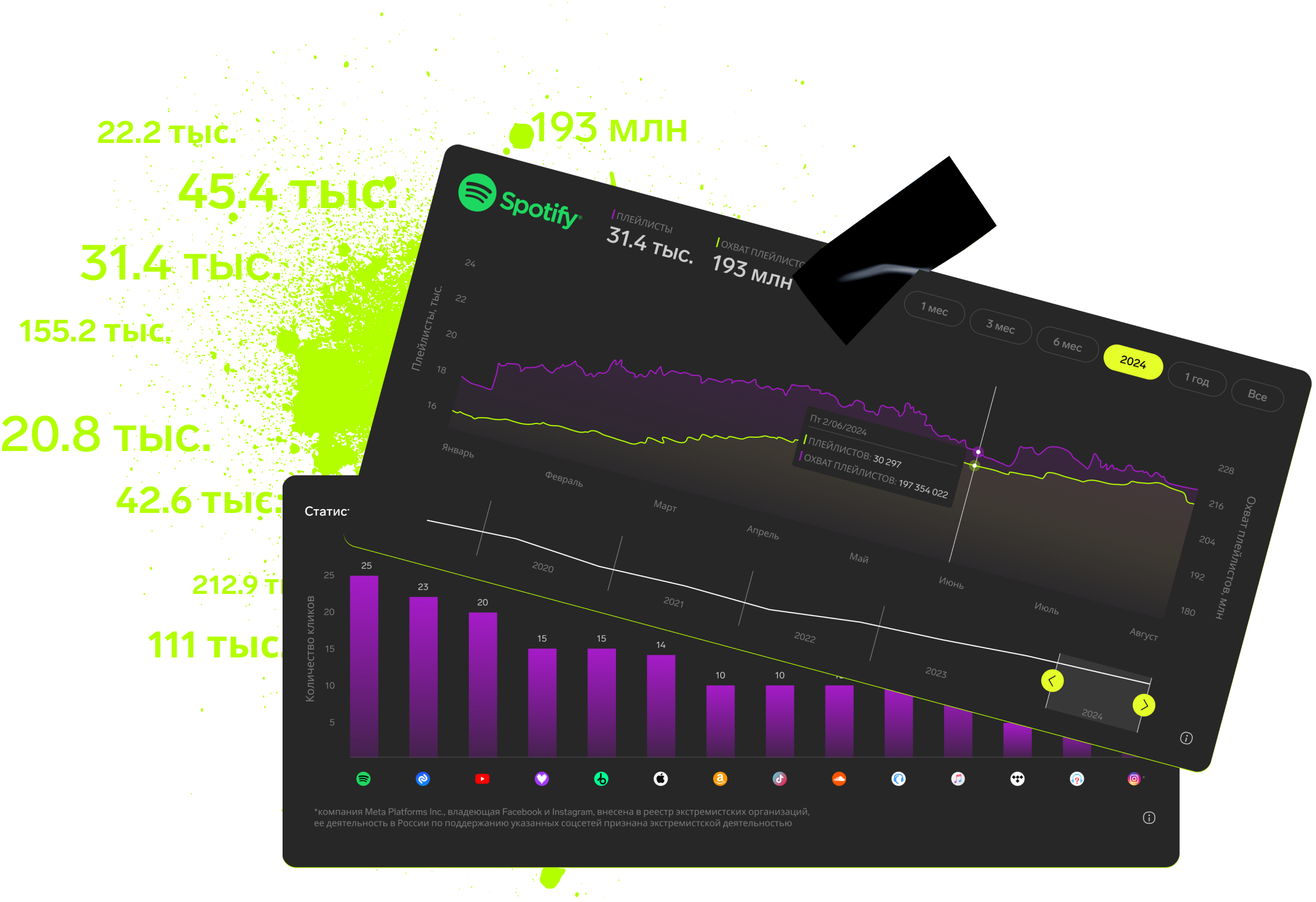
In Rifify, you can track stream and audience dynamics, compare different periods, and see how interest in the artist changes after a release, posts, or promo campaigns. This lets you make decisions based on how listeners actually interact with the music—not just on how the numbers look.
What Counts as a Good Result
There’s no universal benchmark for saves, playlist adds, or reposts. Results depend on genre, audience size, release type, the artist’s career stage, and traffic sources. For a new independent project, a few hundred active listeners who save tracks and share them can be more important than tens of thousands of random streams.
The main reference point is your own trajectory. Compare the release not to some abstract “hit track,” but to the artist’s previous work:
- Is the save rate growing?
- Are there more returning listeners?
- Is the audience adding music to playlists more often?
- Did the quality of reaction improve after changing creatives or ad settings?
These shifts are often more important than a one-time stream spike.
Key Takeaway
Streams create visibility. Saves confirm interest. Playlist adds embed the track into the listener’s life. Reposts help the music move beyond the existing audience.
So evaluate each release holistically. Your goal isn’t just to get someone to press play once, but to give them a reason to save the track, add it to their playlist, and send it to someone else. Those actions gradually build a loyal audience, steady growth, and a long-term artist career.
Subscription includes

Detailed track analytics
AI assistant
Real-time activity feed
Notifications about new streams, playlists and mentions
Automatically imported catalog
Pricing
Choose the right option and find out the final price
Maximum number of artists
Subscription duration
Total
$
Monthly cost per artist
$
By clicking the «Proceed to payment» button, you agree to the Privacy Policy
Couldn’t find the right option?