How to Define Your Musical Positioning in One Sentence
3 Nov 2026
Musical positioning is a short, precise answer to one question: why should a listener choose you rather than any of a dozen similar artists? In a single sentence, it explains your sound, subject matter, and what makes you different — clearly enough for a playlist editor, journalist, promoter, or new listener to understand.
What positioning is
Positioning is the place you occupy in your audience’s perception: the associations, emotions, and expectations that arise when someone hears your name or opens your profile.
Strong positioning answers several questions at once:
- Who are you as an artist?
- What kind of music do you make?
- Who is it for?
- What sets you apart from others?
- What feeling or meaning do you convey?
For example, “I make R&B” is a genre description, not positioning. But “dark, atmospheric R&B about loneliness and urban detachment” already conveys your sound, mood, and thematic focus.
Why one sentence matters
If you cannot briefly explain who you are as an artist, it will be even harder for a listener to figure it out on their own.
A one-sentence positioning statement is useful almost everywhere:
- In your profile description on streaming services and social media
- In pitches to playlist editors and media outlets
- In presentations for labels, festivals, or promoters
- In release descriptions
- When communicating with collaborators, producers, and contractors
- As a guide for choosing visuals, content themes, and your communication style
Positioning also helps you make decisions: whether to accept a collaboration, what visual direction to choose for a release, and which topics to explore on social media. If an idea doesn’t align with your core statement, it is probably diluting your artist image.
The one-sentence formula
Use a simple structure:
[Who you are] + [your sound or genre] + [what your music is about] + [what makes you different].
You don’t need to include every element literally, but they help you avoid missing the essentials. The key is that the phrase should be specific, clear, and reflect your uniqueness — not just your genre.
Examples
- “I’m an indie-pop artist writing about growing up, anxiety, and finding myself through minimalist production and honest lyrics.”
- “We make danceable electronic pop with Russian-language lyrics about night-time cities, freedom, and the fragility of relationships.”
- “I blend folk guitar and contemporary R&B to explore family history and identity.”
- “This is dark synthwave about digital burnout, for listeners looking for music that offers a space to switch off from information overload.”
Each example includes a genre framework, an emotional or thematic emphasis, and a contrast with a generic description like “I make pop” or “I write songs.”
How to write yours
Describe your music without clichés
Write down 10–15 words or phrases that accurately describe your sound. Avoid vague terms like “high-quality,” “unusual,” “soulful,” or “something of my own.” Instead, use concrete characteristics: tempo, instruments, vocals, mood, references, and lyrical themes.
For example: “slow tempo,” “synthesizers,” “muted vocals,” “lyrics about burnout,” “a late-night city atmosphere.”
Define your audience
Think about who your music genuinely resonates with. This doesn’t have to be a narrow demographic description; what matters more is understanding the listener’s state of mind, values, and needs. Positioning always answers the question, “Who is this for?”
For example, not simply “people aged 18–30,” but “listeners who are tired of overly dense production and want calm, honest music for the evening.”
Find your difference
Look at artists you might be compared with. Identify what you have that they don’t: an unusual genre combination, a distinctive vocal tone, a visual language, a theme, your background, or the way you engage with your audience.
Your difference doesn’t have to be radical. Sometimes a precise combination of elements is enough — for example, not “folk,” but “folk with electronic textures and lyrics about life in a small town.”
Cut the excess
Your first draft will almost always be too long. That’s fine: write down everything important first, then distill it into one clear thought.
Check your statement against these criteria:
- It makes clear what kind of music you make.
- It shows what makes you different.
- It contains no empty words or generic praise.
- You can say it aloud in 5–10 seconds.
- It doesn’t sound like an advertising slogan.
- You wouldn’t feel awkward repeating it in a meeting with an editor or promoter.
Test it in practice
Give the sentence to several people who don’t know your project and ask them to describe what kind of music they expect to hear. If their impressions match your intention, the statement works.
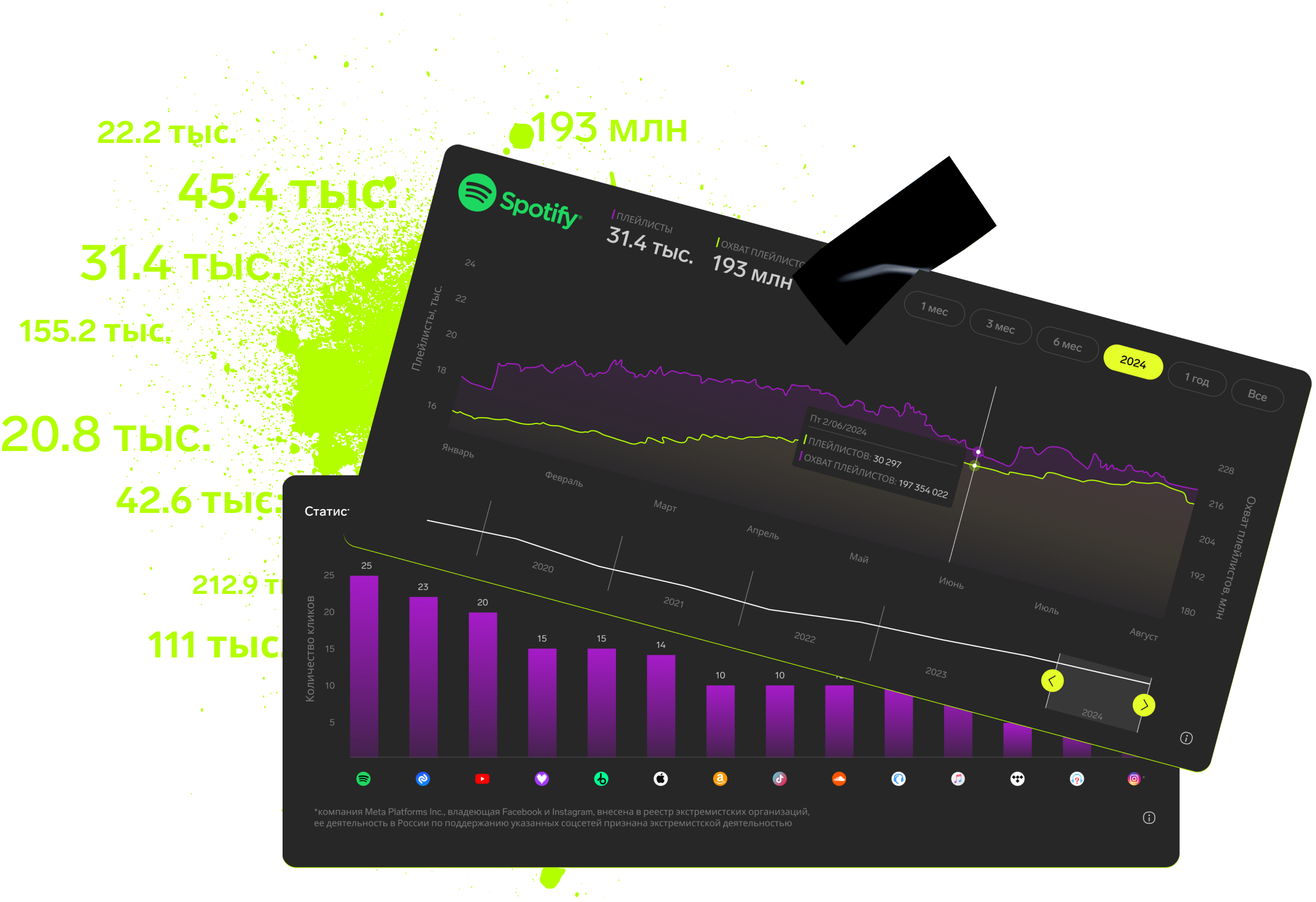
Then compare it with real data. Rifify brings together statistics from music platforms and social networks, so you can see which tracks, audiences, and channels actually support your chosen positioning. For example, if you position yourself as an artist making calm evening music, but your growth is mainly driven by energetic dance tracks, it may be worth revisiting either your positioning or your content strategy.
One precise sentence doesn’t replace your music, visuals, or promotion strategy — but it becomes their shared foundation. It helps make your project clearer to your audience and more distinctive among other artists.
Subscription includes

Detailed track analytics
AI Insights
Real-time activity feed
Notifications about new streams, playlists and mentions
Automatically imported catalog
Pricing
Choose the right option and find out the final price
Maximum number of artists
Subscription duration
Total
$
Monthly cost per artist
$
By clicking the «Proceed to payment» button, you agree to the Privacy Policy
Couldn’t find the right option?