How to Choose an Album’s Lead Track Without Relying on Guesswork
17 Nov 2026
Choosing an album’s lead track often comes down to arguments within the team: someone likes the chorus, someone is confident in the potential of a particular verse, and someone relies on personal intuition. But a lead single is a strategic decision. It can—and should—be selected based on measurable signals: listener retention, social media response, the performance of snippets, and early listening trends.
What Is a Lead Track?
A lead track is the song that shapes the first impression of an album, attracts new listeners, and creates context for the rest of the release. It should both reflect the album’s overall sound and have enough standalone appeal to work in playlists, short-form videos, and recommendations.
That is why the criterion “I think this is a hit” is not enough. Instead, use a set of testable hypotheses: the track holds attention, prompts listeners to take action, works well without video, and stays consistent with the artist’s overall identity.
Metrics to Watch
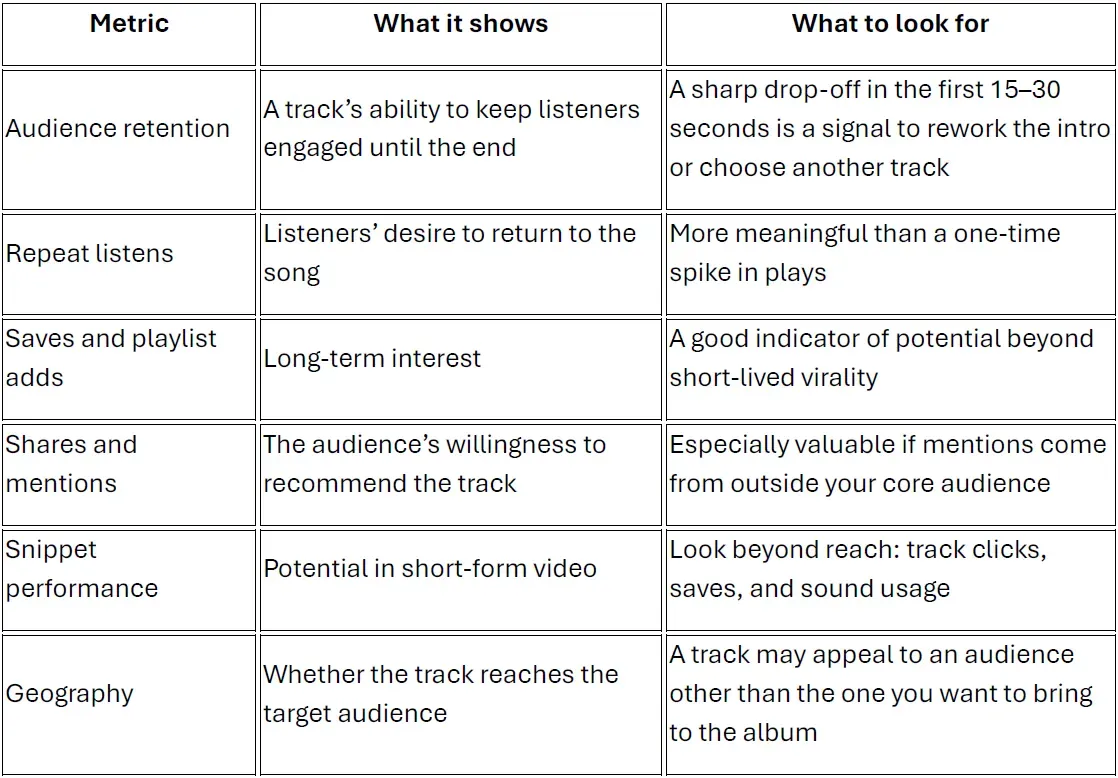
No metric should be viewed in isolation. For example, a track with high reach but low retention may be better suited to short-form content than to leading an album. Meanwhile, a song with moderate reach but strong repeat listens and saves may be a more reliable choice.
How to Run a Test Without Guessing
- 1.Create a short list of candidates. Usually, 3–5 tracks are enough—songs that already pass a basic filter: they are recognizable, reflect the album, and have a clear narrative arc.
- 2.Test snippets. Prepare clips of equal length, for example 15–30 seconds featuring the strongest moment. Publish them under comparable conditions: at similar times, in similar formats, and with comparable promotion budgets.
- 3.Compare actions, not just views. Views show content delivery, but decisions should be based on saves, shares, profile visits, pre-saves, and sound usage.
- 4.Test the track within the catalog. See whether it leads listeners to other songs, increases listening depth, and retains new audiences.
- 5.Give the data time. Do not make a decision about the lead track within the first few hours. A reliable comparison usually requires several days of observation under identical exposure conditions.
Where to Bring the Data Together
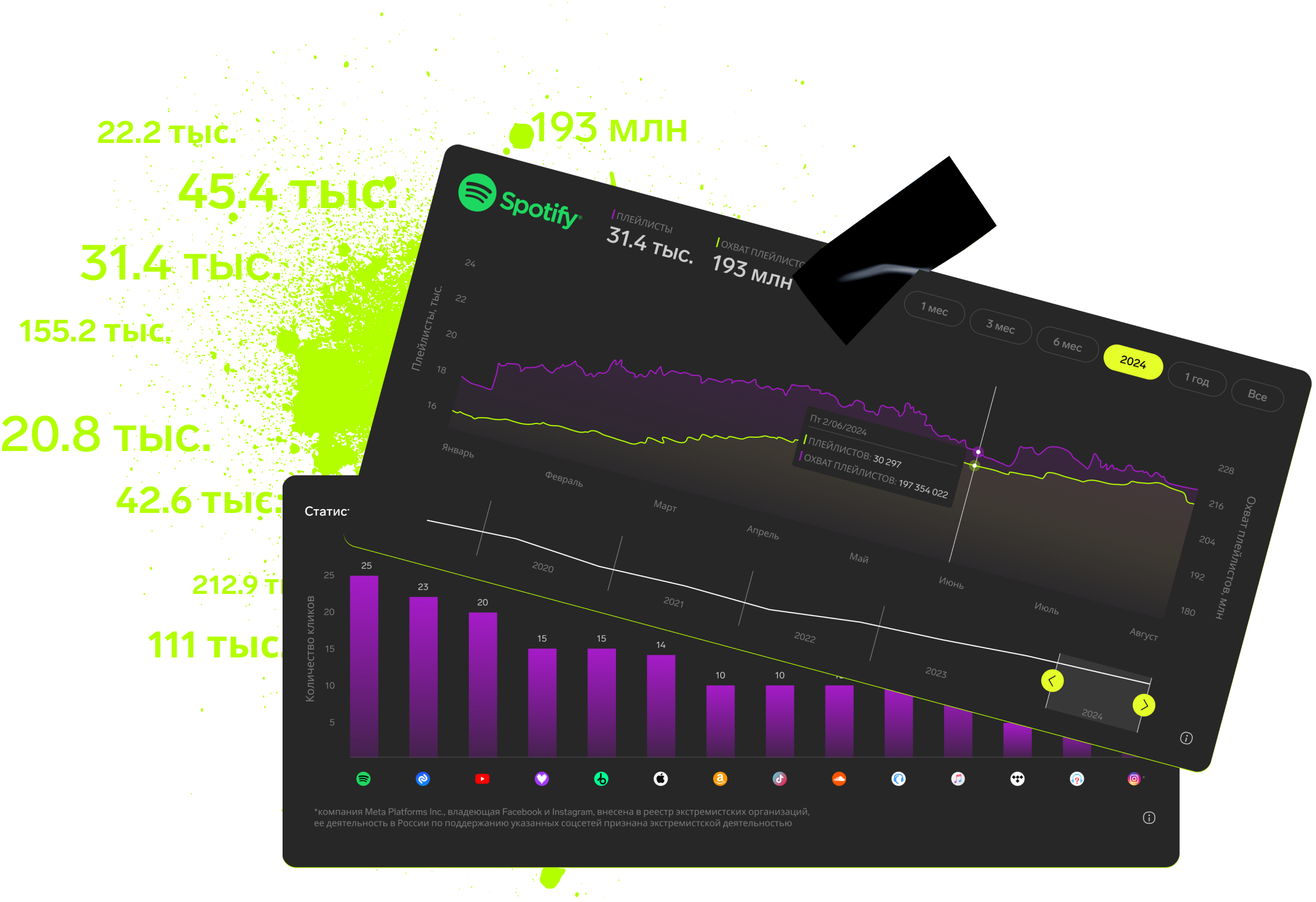
Fragmented statistics from streaming platforms, social media, and charts make comparison difficult: one service shows plays, another shows reactions, and a third shows playlist placements. Rifify brings analytics from most music platforms into a single interface, including data from streaming services, playlists, charts, and social networks.
In Rifify, you can monitor track performance, audience data, mentions, playlist placements, and notifications about new streams. When choosing a lead track, this makes it possible to compare candidates based on actual market response rather than intuition: which snippets generate saves, where the track is finding listeners, and which playlists are delivering results.
The practical workflow is simple: export metrics for all candidates, identify the tracks with the strongest retention and engagement, then compare them against demographics and traffic sources. If one track consistently outperforms the others across several independent metrics, you have a data-backed lead—not just the team’s random favorite.
Common Mistakes
- Choosing a track based on its strongest chorus. A strong moment does not guarantee that listeners will stay until they hear it.
- Evaluating reach alone. Reach without saves, repeat listens, and profile visits often does not convert into an album audience.
- Ignoring the release context. The lead track should support the album as a whole, not exist separately from its concept.
- Comparing tests under different conditions. Different posting times, formats, or budgets make the conclusions unreliable.
- Delaying the decision indefinitely. Data is meant to reduce uncertainty, not replace one doubt with another.
A lead track should be chosen not based on taste, but on a combination of evidence: retention, repeat listens, saves, shares, snippet performance, and the ability to guide listeners toward the rest of the album. When these signals are collected in one system, such as Rifify, the decision becomes repeatable: you can see which track is genuinely working with the audience and launch the release with a clear strategy.
Subscription includes

Detailed track analytics
AI Insights
Real-time activity feed
Notifications about new streams, playlists and mentions
Automatically imported catalog
Pricing
Choose the right option and find out the final price
Maximum number of artists
Subscription duration
Total
$
Monthly cost per artist
$
By clicking the «Proceed to payment» button, you agree to the Privacy Policy
Couldn’t find the right option?