Finding “Doppelgängers”: Find Their Playlists and Copy Their Strategy
24 Jul 2026
In the fast-changing world of music marketing, one of the most useful tactics is learning how to find and study your “doppelgängers.” These are artists or projects whose audience, playlist distribution, and listener behavior are very similar to yours. If you understand what works for them, it’s easier to build your own promotion: plan releases more accurately, hit the right playlists, and spend your budget more effectively.
This approach is especially helpful if you’re an artist, label, or manager and want to rely on real data instead of guesses. Rather than acting blindly, you can look at working models and adapt them to your project.
Why look for “doppelgängers”
The main value of this method is that it reveals working patterns, not abstract advice. You can see which playlists actually bring listeners, how the audience reacts to releases, and what helps an artist grow not only in streams but also in followers.
Analyzing doppelgängers also sharpens targeting. When you know where similar artists are being heard, it’s easier to choose advertising platforms, craft pitches for curators, and avoid wasting effort on weak hypotheses. That saves both time and money.
Who counts as a “doppelgänger”
An ideal doppelgänger isn’t just an artist in the same genre. Look broader: compare sound, mood, production quality, audience size, and listener geography. Two projects can look different on the surface but share the same audience and playlist placements.
Listener behavior is another key criterion. Check how quickly tracks are added to playlists, how long they stay there, how often people return to releases, and how interest changes between new songs. That helps you assess not just popularity but its quality.
Also consider release cadence and promotion channels. One artist may grow through a dense release schedule, another through collaborations, and a third through active social media and paid ads. So don’t rely on a single metric — look at the whole system.
Where to find analytics
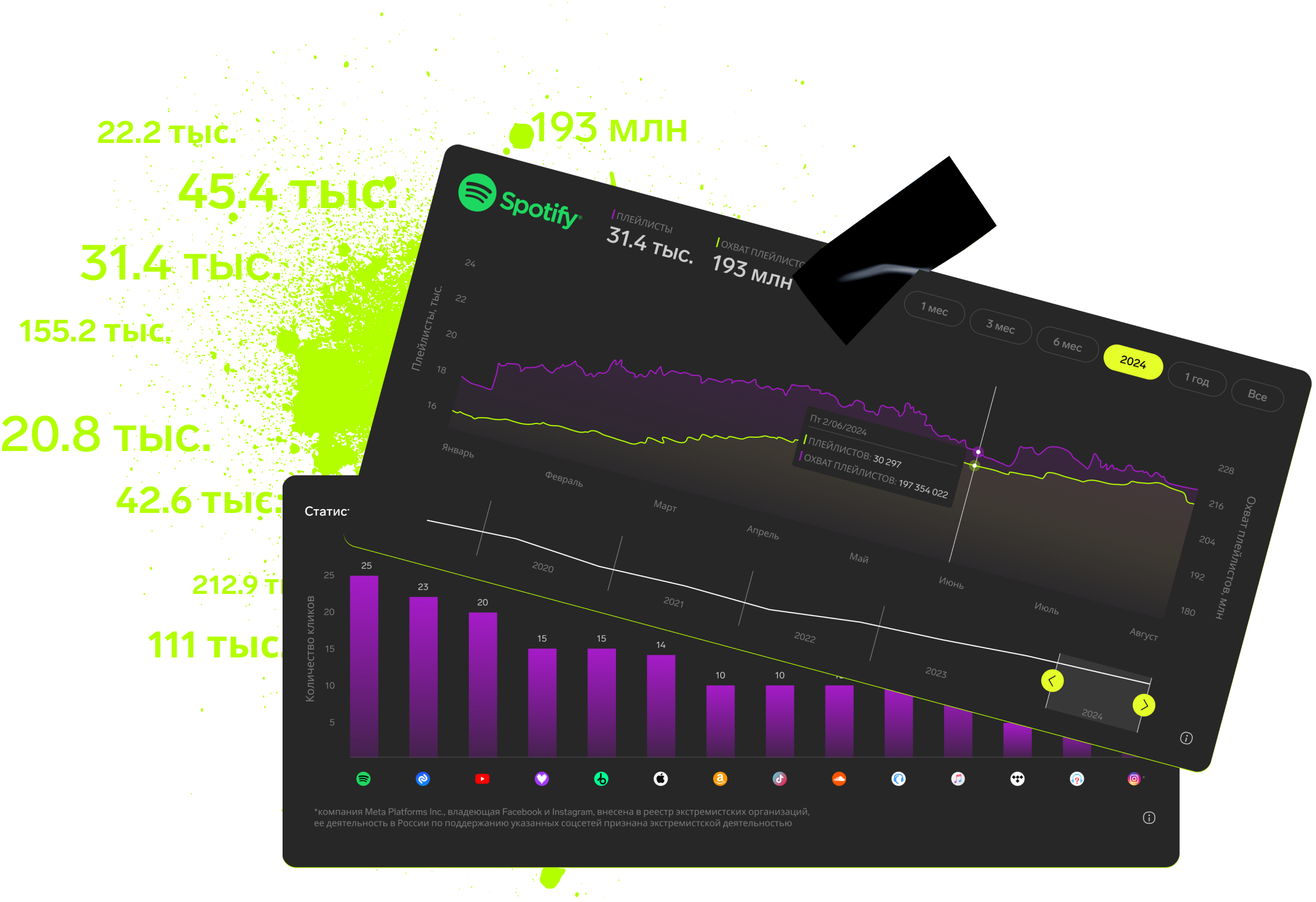
Music analytics platforms make finding doppelgängers easier. For example, Rifify helps quickly identify similar artists by audience, playlists, and geography, and shows the structure of their playlist presence. That saves time and gives a precise starting point for analysis.
Also check streaming platforms’ recommendations: “related artists,” “if you like…”, and mood or genre playlists. Study social media and niche sites too — these show how an artist engages their audience, which content formats work best, and how people get involved with a release.
Pay special attention to playlist aggregators and curator databases. The clearer you are about which playlists recur across similar artists, the easier it is to build your own playlist-entry strategy.
Step-by-step analysis
Start with search parameters. Usually 3–5 key metrics are enough: genre, active audience, geography, average plays per track, and release frequency. Use analytics to build an initial candidate list, then add artists from streaming recommendations manually.
Then structure the data. Record which playlists the artists appear in most often, which give steady traffic, when entries happened, and how long tracks remain in the playlist. If possible, note extra details — press coverage, collaborations, ad campaigns, media appearances.
Next, identify how the artist got into playlists. Sometimes it’s direct curator contact, sometimes smart metadata, sometimes alignment with a trending genre or mood. These patterns are usually the most actionable.
Also assess audience effects. If playlist placement increases not only streams but also follows, repeat listens, and listeners from target countries, that’s a strong channel worth copying.
What to adopt
Don’t copy everything blindly. It’s more useful to choose elements you can realistically adapt to your project. That might be track length, release frequency, types of collaborations, or specific playlists to target.
Packaging matters: metadata must be accurate — genre, tags, description, language, mood — all influence algorithmic recommendations and curator decisions.
Promotion content around the release also matters: videos, teasers, snippets, and short posts boost interest and help a track get initial activity signals. The first 1–2 weeks after release are especially critical for gaining extra momentum.
How to avoid mistakes
The most common error is blind copying. What worked for an artist in Berlin won’t necessarily work in Moscow or another market. Context matters more than a template.
Another pitfall is unrealistic expectations about resources. Some strategies need budget, time, or direct curator contacts, so plan accordingly. It’s better to pick a few strong hypotheses and test them than to try to replicate someone else’s entire strategy.
A good approach is experimentation. Vary release descriptions, visuals, promo formats, and publish times, and track what performs best. In the long run, the winner is not the one who copies most loudly but the one who adapts working ideas to their own reality.
Example workflow
Suppose you find 5 doppelgängers using analytics and streaming recommendations. You discover they repeatedly appear in the same 10 playlists that deliver steady traffic. You plan your release to boost the first two weeks with targeted ads and organic promo, while sending short, precise pitches to the curators of those playlists.
Adding a remix or a collaboration with an artist from that same circle increases your chances of entering the right ecosystem. You’re not just pushing one track — you’re building a clear growth system around it.
Final note
Searching for doppelgängers is about spotting recurring patterns, seeing how similar artists operate, and using those observations as a foundation for your strategy.
If you do this systematically, you’ll better understand your audience, choose playlists more precisely, and plan releases with greater confidence. Tools like Rifify speed up finding useful benchmarks and let you make data-driven decisions rather than relying on intuition.
In music marketing, the advantage goes to those who test, adapt, and repeat proven tactics — not to those who only talk loudest about strategy.
Subscription includes

Detailed track analytics
AI assistant
Real-time activity feed
Notifications about new streams, playlists and mentions
Automatically imported catalog
Pricing
Choose the right option and find out the final price
Maximum number of artists
Subscription duration
Total
$
Monthly cost per artist
$
By clicking the «Proceed to payment» button, you agree to the Privacy Policy
Couldn’t find the right option?