Data Spikes: Your Moment to Promote – How Not to Miss It
18 Aug 2026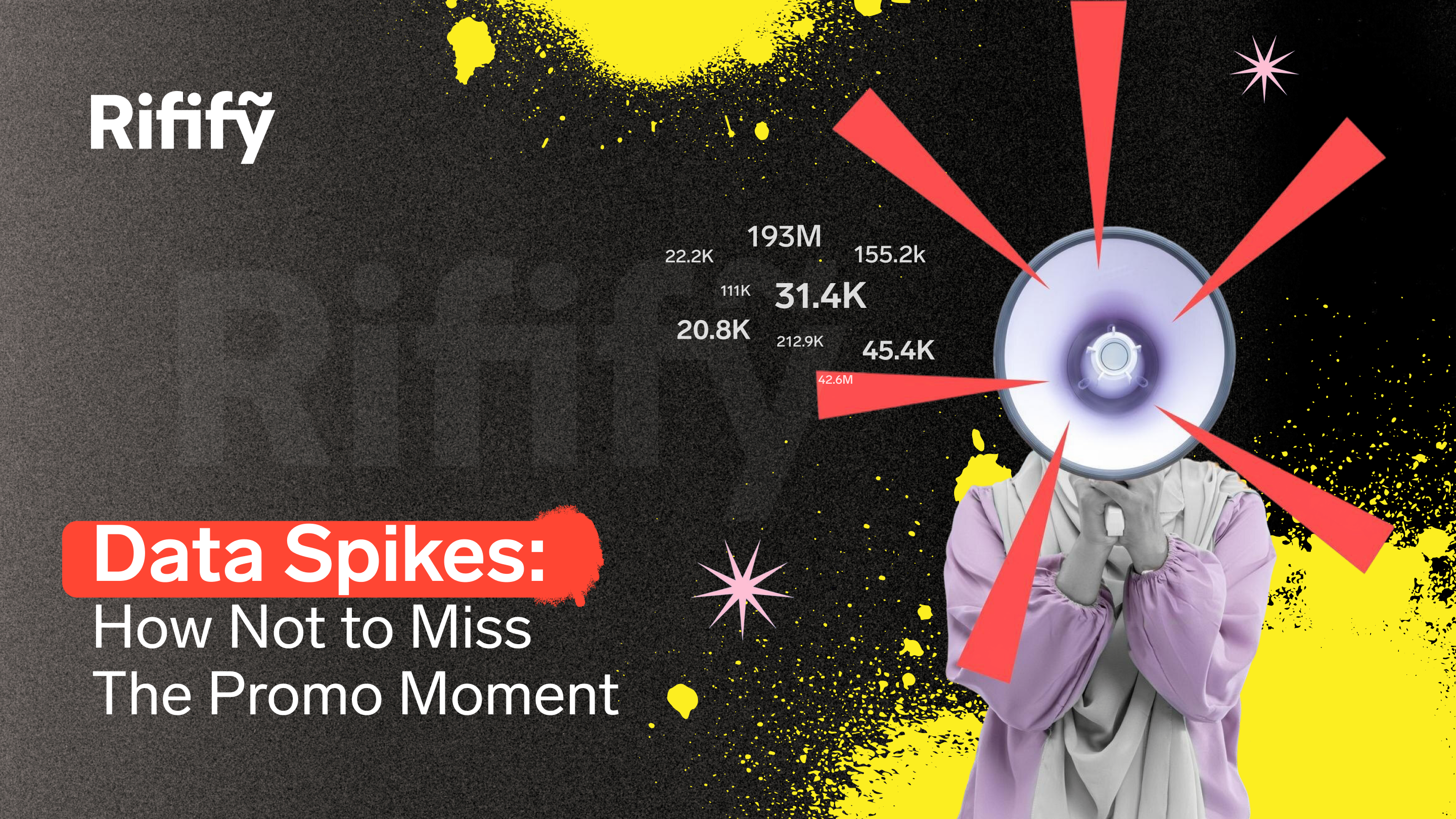
A data spike is a signal that your audience has already responded to your content, track, post, or newsletter. If you catch this moment correctly, you can boost reach, accelerate growth, and turn random interest into a steady funnel.
What is a spike?
A spike is a sharp, noticeable deviation of a metric from its usual level: views, streams, saves, clicks, subscriptions, comments, or reposts. It may be short, but precisely during this brief window you have a chance to amplify the effect.
It’s important to distinguish a spike from noise. One random view or one good day isn’t enough to draw big conclusions, but a sustained exceedance of your average level already indicates that a trigger worked: topic, format, channel, posting time, or an external news hook.
Why this matters for promotion
Promotion works best not “in a vacuum,” but when the audience is already interested. If you start promoting material after the spike has ended, you lose part of its potential.
Here’s what timely reaction gives you:
- Boosted reach, as algorithms already see increased activity.
- Higher conversion, because a warm audience is easier to turn into subscribers, listeners, or leads.
- Budget savings, since you’re amplifying already-working content instead of testing everything blindly.
- Clearer insight into what truly resonates with your audience.
Where to look for spikes
You can catch spikes in almost any channel with analytics. For musicians and marketers, these points are especially useful:
- Streaming platforms: sharp growth in streams, completions, playlist adds.
- Social media: jump in reach, saves, reposts, comments, followers.
- Website or landing page: increased clicks, time on page, form submissions.
- Email newsletters: higher open rates and click-through rates.
- Internal analytics: rising interest in a specific release, artist, article, or service.
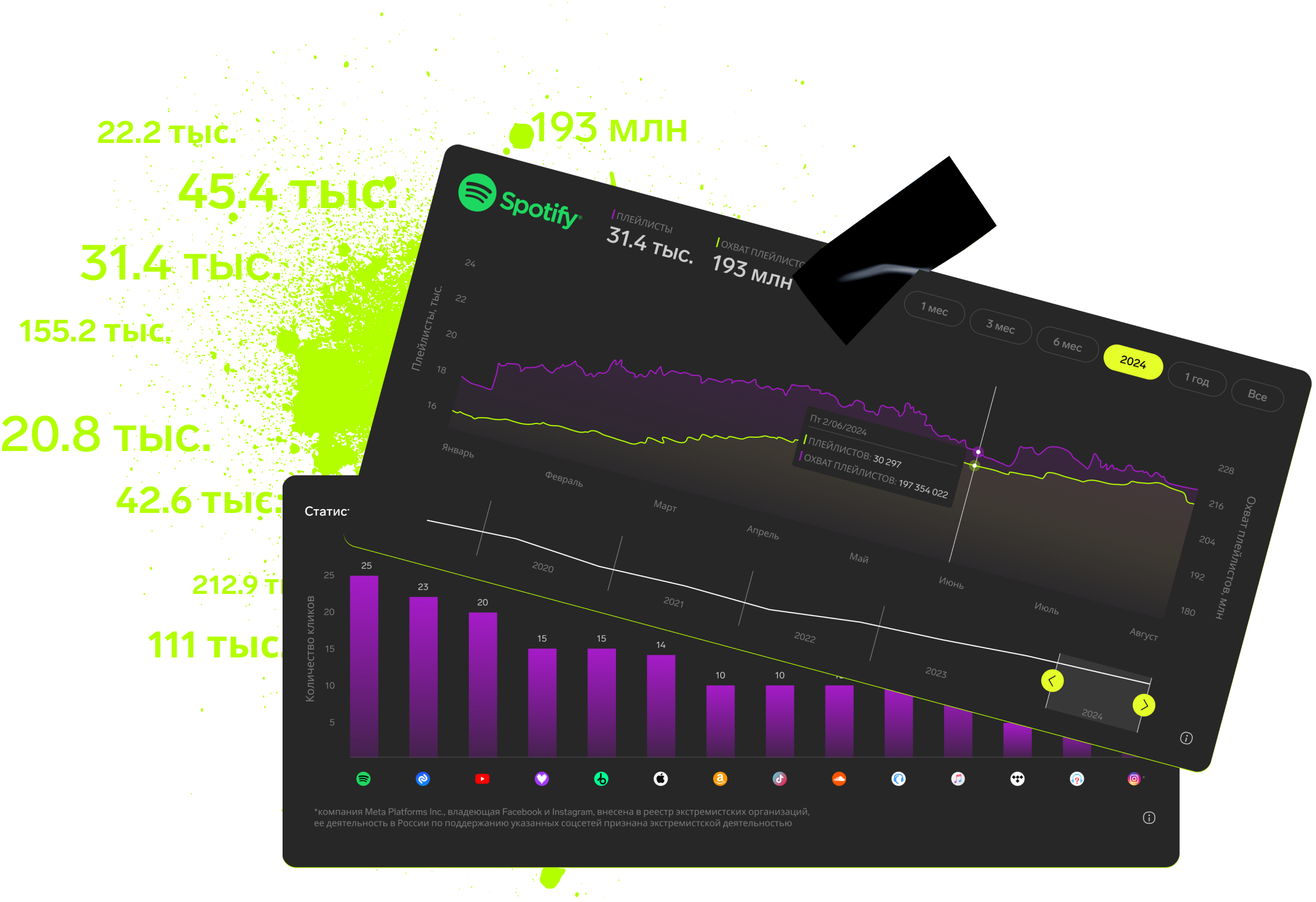
If you have multiple channels, compare them. Sometimes a spike starts in one social network, then moves to another or to a streaming platform. In Rifify, it’s convenient to track how one successful signal in the data connects to further growth in interest around a release.
How to know the moment has come
Not every increase requires immediate amplification, but there are signs that it’s time to turn on promotion:
- The metric is growing faster than usual for several hours or days in a row.
- A traffic source appears that previously barely worked.
- One post, track, or article clearly outperforms the rest in engagement.
- The audience starts picking up the topic on their own: sharing, commenting, saving.
- There’s a repeatable pattern: a spike already happened on similar content.
A good benchmark is comparison with your average level. If a post usually gets 1,000 views, but a new one quickly reaches 3,000–5,000 and keeps growing, that’s a signal to act.
What to do in that moment
When you notice a spike, your task is to quickly expand it. The best approach is to have a ready set of actions for growth situations.
Quick steps
- 1.Follow up with new content if the spike is tied to a specific post, track, or news hook.
- 2.Pin the successful material in your profile, channel, or homepage.
- 3.Amplify distribution through additional platforms.
- 4.Launch ads or seeding on content that has already proven interest.
- 5.Add a clear CTA: subscribe, click, save, stream, or apply.
For music promotion
If the spike happened around a release, don’t limit yourself to just one post. You can quickly prepare:
- a short clip or vertical snippet;
- a story with your reaction;
- a post about the track’s creation story;
- a playlist of similar tracks;
- a newsletter message;
- a targeted pitch to playlists and communities.
If the spike is tied to an interview, snippet, or quote, turn it into a series of touchpoints, not a single publication.
Common mistakes
The most frequent mistake is reacting too late. Many notice growth only after it’s gone, making promotion a chase.
Other mistakes:
- Amplifying the wrong content—the one that isn’t actually growing.
- Looking only at views and ignoring engagement.
- Not recording the spike’s source.
- Not having ready-to-use materials for quick launch.
- Trying to scale a one-off without checking if it’s repeatable.
If a spike doesn’t repeat, don’t build a strategy around it. First understand the cause, then scale.
How to build a system
To avoid missing the moment, you need a simple monitoring process. It doesn’t have to be complex, but it should run regularly.
This cycle works well:
- Daily: check key metrics across main channels.
- Note anomalies and compare them to your usual level.
- Record which content caused growth and why.
- Have action templates ready for spike situations.
- Weekly: review what can be repeated or amplified.
If you work with music, content, or services, it helps to keep a separate table with notes: date, channel, content type, metric, spike reason, actions taken, and results.
A data spike is a chance to amplify interest that has already started. The key is to notice it in time, understand its source, and quickly turn it into action: content, ads, seeding, or a funnel.
Subscription includes

Detailed track analytics
AI assistant
Real-time activity feed
Notifications about new streams, playlists and mentions
Automatically imported catalog
Pricing
Choose the right option and find out the final price
Maximum number of artists
Subscription duration
Total
$
Monthly cost per artist
$
By clicking the «Proceed to payment» button, you agree to the Privacy Policy
Couldn’t find the right option?