Breaking Down Your Track: Questions That Are Easy to Answer
8 Sep 2026
Before you pitch your track, run ads, or plan content, it helps to look at it not just as the creator, but as a listener. You don’t need to dive into complex metrics or build a big strategy right away—start with simple questions about the release itself.
This kind of breakdown helps you clarify the track’s core idea, choose your audience, prepare platform descriptions, and understand which strengths to build your promotion around. After release, you can compare your answers with real data in Rifify: for example, check who’s actually listening, which cities the streams come from, and which tracks in your catalog get the most attention.
What Is This Track About?
Try describing the song in one or two sentences, without complex imagery that only you understand.
For example: it’s a song about a breakup where the person doesn’t try to get the past back, but learns to move on. Or an energetic track for that moment when you want to switch off doubts and take the first step.
If you can’t pin down the theme, listeners may also struggle to grasp the main message. In that case, don’t force a complicated description: sometimes a track has no specific story, but instead a mood, a state, or a visual image.
Questions to ask yourself:
- What emotion does the track carry?
- What situation could be happening in its music video?
- What could a listener say: “This is exactly about me”?
- What feeling should remain after the final note?
What’s the Main Emotion?
Musical genre matters, but it doesn’t always decide who will like the track. People often choose music by mood: to focus, get through a breakup, gear up before something important, drive through the night, or just distract themselves.
Identify one primary emotion and one or two secondary ones. For example: main mood is bittersweet sadness, with nostalgia and hope as extras. Or main mood is confidence, with drive and boldness as additions.
This will help when you prepare short videos, cover art, release descriptions, and pick similar artists.
Ask yourself:
- Does the track calm, energize, unsettle, or inspire?
- Does it sound like a personal confession, a dance moment, or a soundtrack to a specific scene?
- What time of day do you want to play it?
- Where will it feel natural: in headphones, in the car, in a club, on a walk, at home?
What Sticks First?
Every song can have its own “hook”—the moment that grabs attention and stays in memory. It’s not always the chorus. Sometimes it’s the first line, an unusual vocal tone, a melodic twist, a bass part, a rhythm switch, or one perfect phrase.
Try listening as if you’re hearing it for the first time. At what point would you turn it up? Where would you want to replay a fragment or send it to a friend?
That moment is often what you should use in short clips and teasers.
Check:
- At what second does the strongest part start?
- Is there a lyric you’d put in a caption or visual?
- What makes this track different from your previous work?
- Which snippet could stand alone and still work?
How Does the Track Start?
The first seconds are especially important in the age of short-form content and fast music choices. A listener might not give the song time to develop if the intro doesn’t spark interest.
That doesn’t mean every track must start with a chorus or a loud drop. A slow, atmospheric, even almost empty beginning can be powerful if it immediately creates intrigue, mood, or a promise of what’s coming.
Answer honestly:
- Is it clear from the first seconds what mood the track puts you in?
- Is there a detail in the intro that sparks curiosity?
- Does the track take too long to “warm up”?
- What fragment will someone hear if they start the track randomly in the middle?
Who Is This Track For?
You don’t need to picture the ideal listener down to the smallest detail. But it’s important to roughly understand who might connect with the track.
Instead of “for everyone,” try describing a few groups. For example: people who listen to modern pop with personal lyrics; fans of electronic music with melancholic vocals; those who love late-night playlists and atmospheric tracks for the road.
The more clearly you understand your potential listener, the easier it is to choose platforms, content topics, visual style, and promotion channels.
Useful questions:
- Which artists might be close to your listener’s taste?
- What songs do they already add to playlists?
- What matters more to them: lyrics, beat, vocals, energy, or atmosphere?
- At what moment in life or during the day could this track be with them?
In What Context Will They Listen?
Music rarely exists separately from a situation. One track fits a workout playlist, another a late-night drive mix, a third you want after a tough conversation.
Context helps you see the practical life of the track beyond release day. It also gives ideas for promotion: short video topics, post storylines, pitch wording, playlist placements, and collabs with content creators.
For example, if a song suits an evening city walk, you don’t have to talk only about how it was made. You can shoot a short video with that mood: shop lights, traffic, headphones, an empty street, and a line from the chorus.
Think about:
- Which playlist would you add this track to?
- For which movie scene could it be a soundtrack?
- What video naturally fits its sound?
- In what mood would someone hit “save”?
Does the Track Have a Story?
The story can be personal, fictional, or built from observations. The main thing is that you can tell it simply, without extra drama.
You don’t have to reveal every detail or turn the description into a long interview. Sometimes one honest thought is enough: the song was born after a specific conversation, written in one night, started from one line in notes, or was an attempt to say something hard to say directly.
Such details make the release feel alive and give you material for posts before and after launch.
You can start with:
- When did the first idea appear?
- How did the track begin: with lyrics, melody, beat, or emotion?
- Was there a moment you wanted to give up on this song?
- What changed the most in the final version?
- What detail about making the track would a listener find interesting?
What Do You Want From This Release?
A single track doesn’t always have one huge goal. But it’s better to know in advance what a good result looks like for you.
Maybe you want to introduce your sound to a new audience. Find a track people will save to personal playlists. Test a new genre. Gather material for live shows. Draw attention to a future album. Or just release a song that matters to you.
Your answer affects promotion. If the goal is audience growth, work harder with short content, similar artists, and niche communities. If it’s about strengthening ties with existing listeners, focus on the creation story, lyrics, and personal communication.
Decide in advance:
- What result will satisfy you one month after release?
- What’s more important: streams, saves, new followers, audience reactions, or gig offers?
- How does this track connect to your next step?
- What should a first-time listener understand about you?
How to Describe the Track in One Sentence?
This is the final check. Imagine you have one line for a post, a pitch, or the answer to “what did you release?”
A good description doesn’t try to list everything at once. It conveys the main thing: genre, mood, theme, or situation.
For example:
- “A melancholic pop track about trying to let go of someone who’s still on your mind.”
- “An energetic electronic track for those tired of waiting for the perfect moment.”
- “A personal hip-hop track about growing up, mistakes, and coming back to yourself.”
- “A warm indie song for late-night drives and conversations left unsaid.”
If you already have a formulation like this, you have a base for your announcement, release description, video script, and audience communication.
The Main Point
Breaking down your track isn’t about finding flaws or trying to explain music “correctly.” It’s a way to see the anchors you can build on.
Answer simple questions: what the song is about, its mood, what grabs in the first seconds, who it might resonate with, and what story you want to tell. After that, it’ll be easier to talk about the release confidently, choose content ideas, and find listeners who really need your music.
Subscription includes

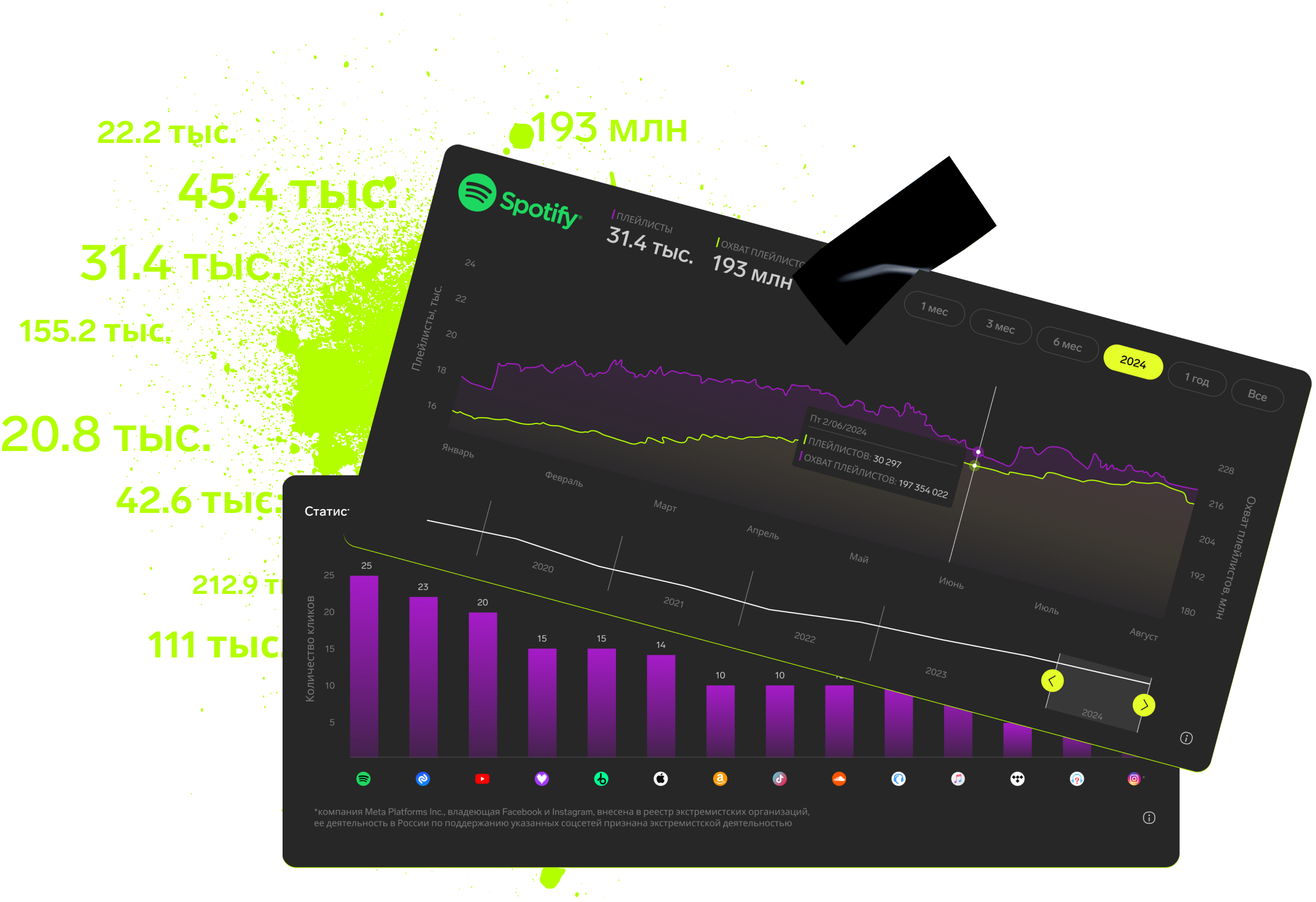
Detailed track analytics
AI assistant
Real-time activity feed
Notifications about new streams, playlists and mentions
Automatically imported catalog
Pricing
Choose the right option and find out the final price
Maximum number of artists
Subscription duration
Total
$
Monthly cost per artist
$
By clicking the «Proceed to payment» button, you agree to the Privacy Policy
Couldn’t find the right option?